

To remove the organic content (expressed by their COD and BOD values) from municipal or industrial wastewater, STC can propose several biological wastewater treatment systems for the elimination of organic contaminants from the treated solution.
The process can be used both for domestic sanitary water as well as for industrial waste and is based on the formation of activated sludge by combining a high concentration of bacteria present in the liquid with protozoa and other microbes. The activated sludge bacteria break down the organic molecules into inert substances which make the water suitable for rivers, lakes and sea discharge.
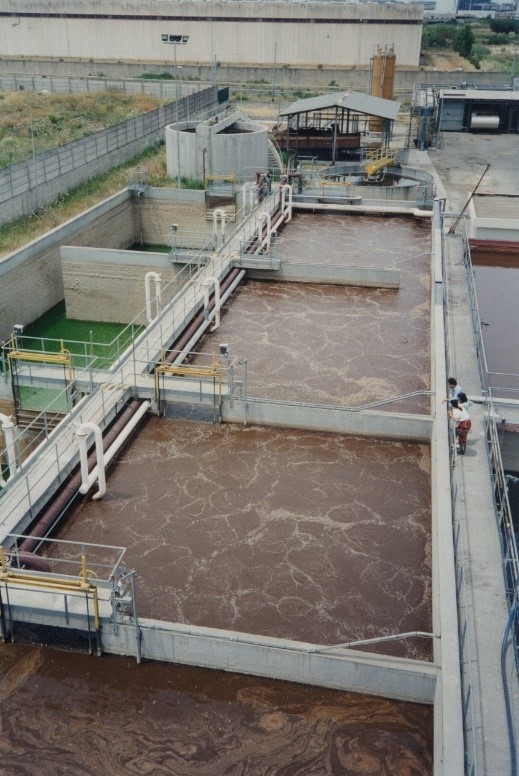
In case (MBR) are used, the wastewater treatment process is based on a combination of sludge activation process and micro or ultrafiltration membrane process thus eliminating the needs for final sedimentation and sludge recirculation which leads to the production of effluent of high quality to be safely discharged or used for irrigation.
Being the concentration of sludge inside the MBR higher than in traditional activated sludges process, also the space requirements for the plant and the civil works costs are reduced.
In case of high organic concentration, instead of using aerobic processes, the water can be treated with anaerobic digestion process. In this case, as by product from the microbiological activity, biogas is produced.
Anaerobic digestion of waters is considered as a pre-treatment to reduce their organic content and normally a traditional aerobic treatment is necessary to reach the required quality level.
Anaerobic digestion is a natural biological process, carried out by a complex microbial community, which, in absence of oxygen, causes the mineralization, gasification and humification of organic substances. Although it is slower than aerobic processes, it is economically competitive for the treatment of concentrated wastewater.
Different objectives are achieved through anaerobic oxidation:
- Stabilization of organic material;
- Destruction of pathogens;
- Reduction of the sludge volume;
- Easier disposal of sludge which sometimes may be used as fertilizers;
- Recovery of biogas, containing about 65% of methane, for the production of energy.
The industrialization of this natural process enabled to move from the initial concept of extensive stabilization of the organic substance in natural environments to actual industrial processes for the production of biogas.
The possible substrates that may undergo this treatment are:
- Wastewater from the food industry;
- Excess sludge of wastewater treatment plants;
- Manure and other agricultural biomass;
- Organic industrial waste;
- Organic fraction of municipal solid waste.
The obtained biogas may have a variable composition with a predominance of methane (50-75%) and carbon dioxide (25-50%). After proper pre-treatments for dehumidification, desulphurization and, if necessary, removal of carbon dioxide, the biogas may be used in centralized plants for the cogeneration of electricity and heat, and for fuels when the content of methane is higher than 95%.
Along with the removal of organic content the plants can be equipped with dedicated sections for the removal of nutrients like nitrogen (nitrification and denitrification) and phosphorous.